
News Summary
Coastal California is bracing for a significant drop in temperatures and potential rain, starting Monday night. Highs are predicted to be 5 to 15 degrees below average. Los Angeles will see a break from the summer heat, while the Bay Area prepares for one of its coldest summers in decades. A low-pressure system from the Pacific is expected to bring relief as coastal towns receive occasional drizzle, but inland areas will continue to experience humidity and warm conditions, complicating the overall weather picture with increased lightning activity and ongoing wildfire risks.
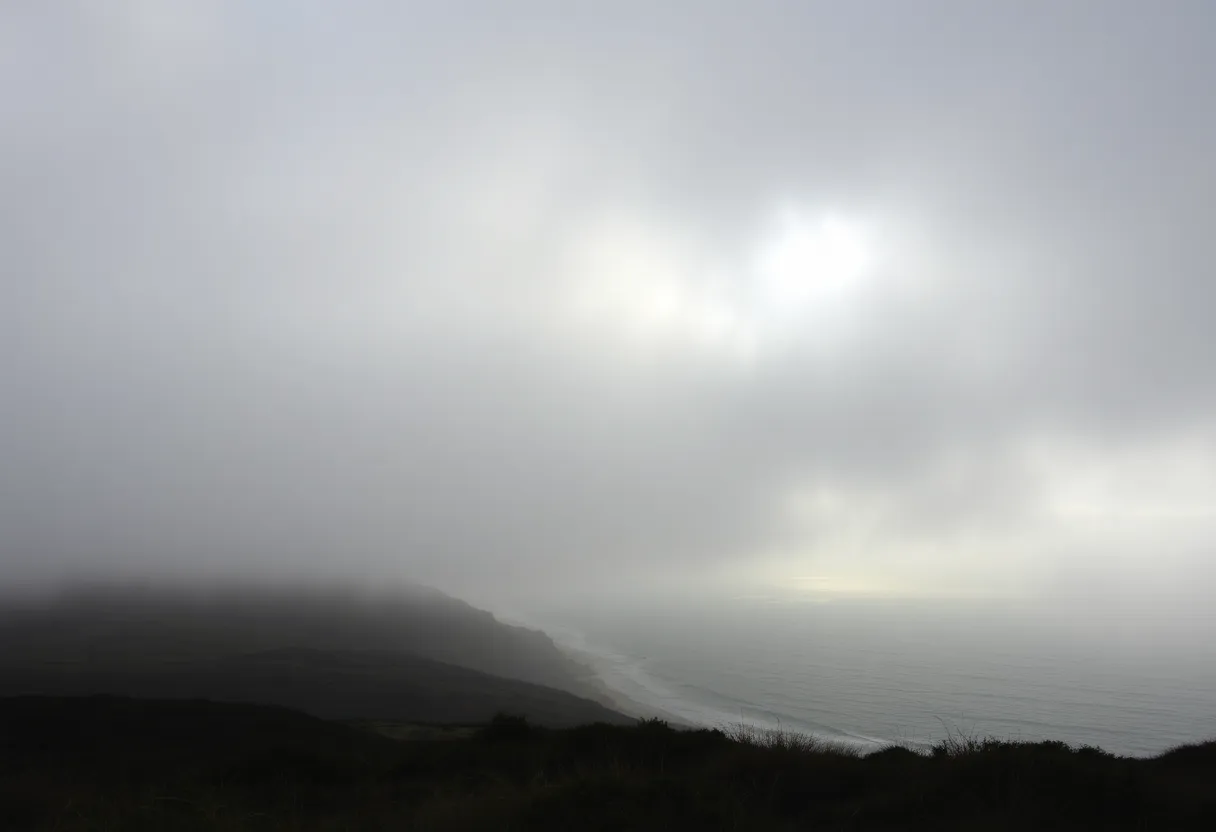
Coastal California is set to experience an unusual drop in temperatures and potential rain starting from Monday night, with forecasts predicting highs 5 to 15 degrees below the seasonal average. Residents across the region will encounter thick fog and chilly breezes, marking a significant change from the recent warm weather patterns.
Areas like Los Angeles are likely to welcome a break from late summer heat waves, as the forecast indicates that Wednesday will be the coldest day in Southern California this week. A thick marine layer accompanied by light drizzle is expected on Tuesday and Wednesday, providing much-needed relief to those weary of high temperatures.
Meanwhile, in the Bay Area, residents are bracing for the coldest summer in decades. High temperatures in San Francisco are projected to be in the low 60s, while other locations may reach the mid-70s. Light showers are also possible in Sonoma and Napa counties; however, rain is minimal in other parts of the region.
As the coastal areas prepare for this weather shift, the influence of an upper-level low-pressure system coming from the Pacific Ocean is significant. This system is bringing moist air and is expected to lead to manageable rainfall in coastal towns like Santa Barbara and San Luis Obispo.
Despite the cooler conditions, certain inland areas are still experiencing monsoonal influences, resulting in warm and humid air but with little precipitation. This has contributed to a rise in unstable weather patterns, leading to substantial lightning activity across Northern California. Such conditions have sparked wildfires, including the TCU September Lightning Complex fire, which has already destroyed nearly 100 structures and burned approximately 14,000 acres since it began on September 2 due to dry electric storms.
Meteorological insights indicate that the combination of hot temperatures, moisture, and instability fosters increased lightning activity, further complicating the regional weather scenario.
Even with the forecast of a cooling trend, there may be a brief respite over the weekend where the Bay Area could experience a final warm beach day before temperatures are expected to dip further. The overall trend suggests that residents should prepare for more consistent cooler weather as the month progresses. While warmer temperatures might re-emerge later in September and extend into October, current predictions signal a shift toward cooler conditions dominating the weather landscape.
Coastal California usually sees its hottest weather in the weeks following Labor Day, yet residents from both Los Angeles and the Bay Area may now need to adjust their expectations for the remainder of the season as unseasonably cool temperatures and showers take precedence.
Deeper Dive: News & Info About This Topic
HERE Resources
Los Angeles Fire Department Enhances Aerial Firefighting Resources
Southern California Faces Heightened Fire Risks
Los Angeles Prepares for Labor Day Heat Wave and Hazardous Surf
New Landscaping Regulations Implemented Amid Rising Wildfire Risks
Severe Heat Wave Hits Southern California
Dangerous Heat Wave Approaches Southern California
Extreme Heat Wave Hits Southern California
Southern California Braces for Midweek Heat Wave
Southern California Prepares for Challenging Wildfire Season
Southern California Faces Power Outages Amid Wildfire Risks
Additional Resources
- Los Angeles Times
- Wikipedia: California
- New York Times
- Google Search: California weather September 2025
- KCRA
- Google Scholar: California weather
- Fox Weather
- Encyclopedia Britannica: California wildfire
- Fresno Bee
- Google News: California weather news
- San Francisco Chronicle