
California, August 26, 2025
News Summary
The California High-Speed Rail project, initially budgeted at $33 billion in 2008, now faces a staggering estimated cost of $128 billion. With ongoing construction primarily in the Central Valley and anticipated completion dates pushed to 2038 for major segments, concerns are rising regarding the project’s viability. Despite skepticism over rising costs, state lawmakers and business leaders advocate for potential economic growth and job creation, while a new legislative bill aims to find additional funding sources amid criticism from opponents.
California’s high-speed rail project, initially approved in 2008 at a cost of $33 billion and designed to be completed by 2020, now faces a staggering budget estimate of $128 billion. This dramatic increase in costs has raised concerns among state officials and the public regarding the project’s viability and future.
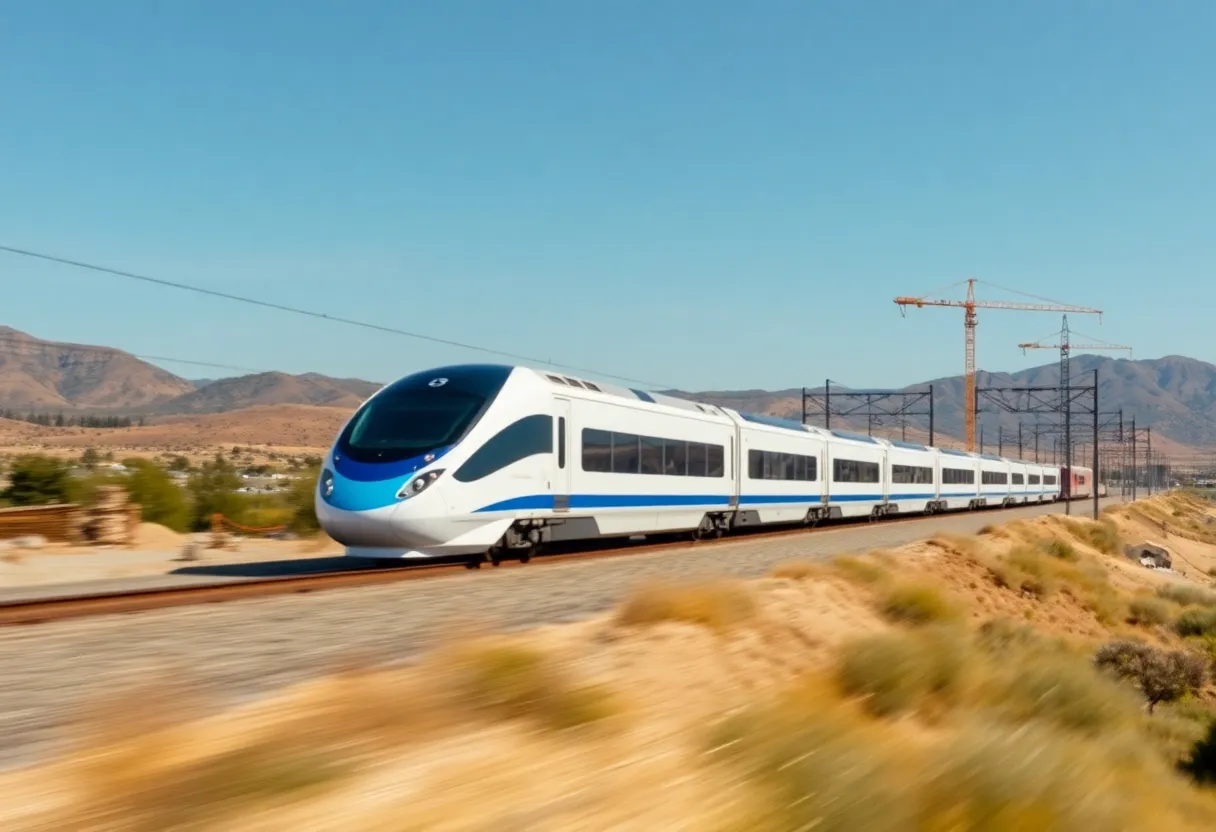
Significantly, approximately $87 billion of the current budget is earmarked to connect Palmdale to Gilroy, with anticipated completion pushed back to 2038. As of now, construction is only ongoing in the Central Valley, where a section of the rail line is being developed. Current plans indicate a completion date of 2032 for a stretch connecting Merced to Bakersfield, which spans 119 miles.
State lawmakers and business leaders provided critical updates about this ambitious project during a recent news conference. State Senator Dave Cortese, the chair of the Senate Transportation Committee, underscored the essential role of the high-speed rail project in promoting economic growth and environmental benefits. Despite skepticism surrounding cost overruns, support remains strong among voters, especially younger demographics.
The Senate has introduced a new legislative bill, SB 545, aimed at discovering new funding sources for the high-speed rail project. However, the project faced setbacks in 2020 when the Trump administration withdrew $4 billion in federal funding, leading the California High-Speed Rail Authority to file a lawsuit to recover the lost financing.
Critics of the project, including Republican Senator Tony Strickland, have expressed concerns about the financial return on investment given the spiraling costs associated with the high-speed rail line. This skepticism is compounded by comments from Trump and Transportation Secretary Sean Duffy, who labeled the rail initiative as a “train to nowhere.” Over $24 billion in funding, primarily from state sources, has already been allocated to the project, raising questions about fiscal responsibility.
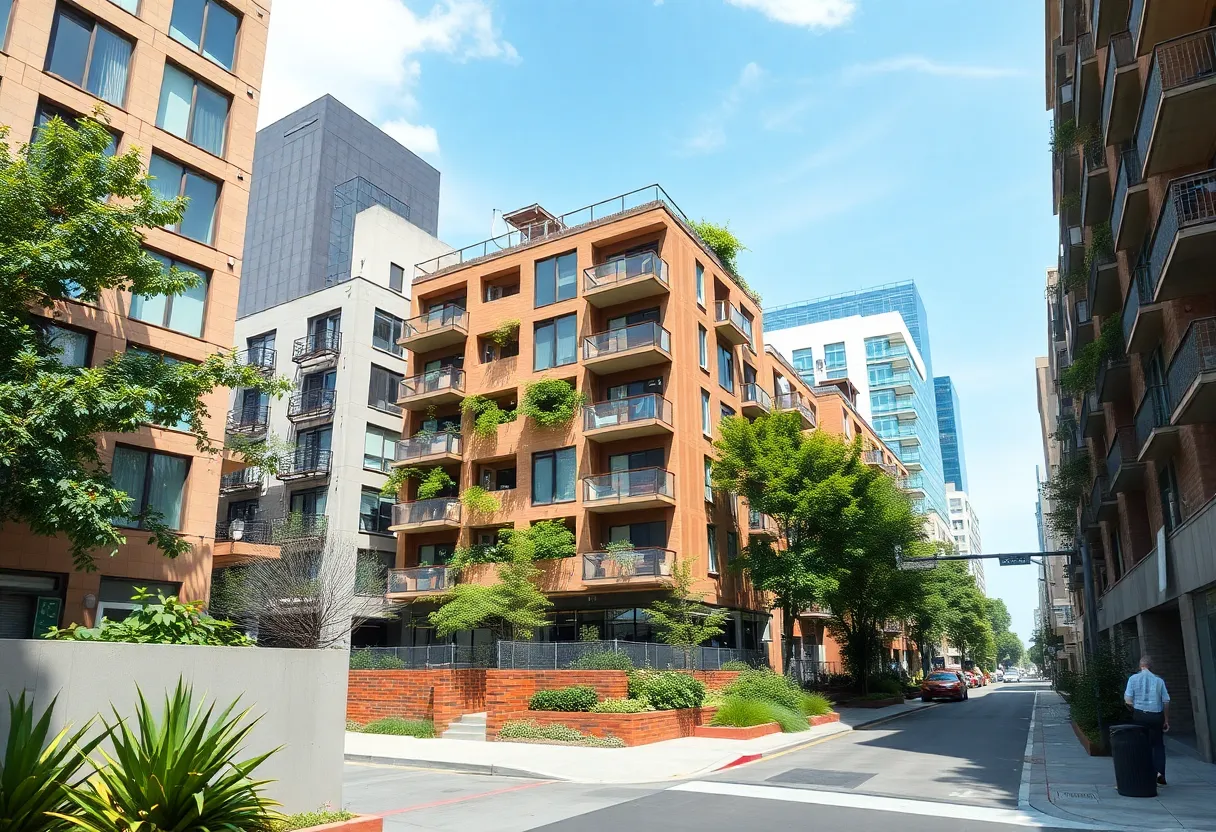
Once completed, the high-speed rail project is expected to stretch approximately 400 miles, with the critical connection between San Francisco and Los Angeles still in question due to the ongoing increase in expected costs. Proponents argue that the project will not only facilitate improved transportation options but also spark economic development opportunities, including potential housing developments along the rail corridor.
Furthermore, a bipartisan committee has been formed to investigate possible misrepresentation of ridership projections put forth by the California High-Speed Rail Authority. The authority’s Chief Executive, Ian Choudri, stated that the project stands at a “crossroads,” emphasizing the need for long-term financial commitments to ensure its completion.
In response to the growing complexities of financing, Senator Cortese has been actively pursuing the possibility of forming private-public partnerships to provide additional funding sources for the high-speed rail initiative. According to projections from the California High-Speed Rail Authority, the final project could generate over one million jobs and create $86 billion in labor income upon completion of the link between Los Angeles and San Francisco.
Key Features of the High-Speed Rail Project
| Feature | Details |
|---|---|
| Initial Cost Estimate | $33 Billion |
| Current Estimated Cost | $128 Billion |
| Key Construction Segment | Palmdale to Gilroy |
| Projected Completion (Palmdale to Gilroy) | 2038 |
| Ongoing Construction | Central Valley (Merced to Bakersfield) |
| Expected Completion (Merced to Bakersfield) | 2032 |
| Total Projected Employment | 1 Million Jobs |
| Total Labor Income Generated | $86 Billion |
FAQ
What is the current estimated budget for the California High-Speed Rail project?
The current estimated budget for the California High-Speed Rail project has increased to $128 billion.
When was the California High-Speed Rail project originally approved?
The project was initially approved by voters in 2008.
How much of the budget is allocated for linking Palmdale to Gilroy?
Approximately $87 billion is allocated for this connection.
What portion of the rail project is currently under construction?
Construction is currently underway in the Central Valley.
What is the expected completion date for the Central Valley segment?
The segment connecting Merced to Bakersfield is expected to be completed by 2032.
Deeper Dive: News & Info About This Topic
- CBS News
- Wikipedia: California High-Speed Rail
- Bakersfield Now
- Google Search: California high-speed rail news
- LA Times
- Google Scholar: California high-speed rail project
- Newsweek
- Encyclopedia Britannica: California high-speed rail
- ABC30
- Google News: California high-speed rail updates